
Harm reduction & addiction recovery.
What it is. Why it works. How it applies to alcohol, substances, eating disorders and every other addictive behaviour — for the people who love someone who is struggling.

Written by Elza Berk, Founder & registered counsellor · ASCHP WCW/271 · 20+ years’ clinical experience · Updated 28 September 2026
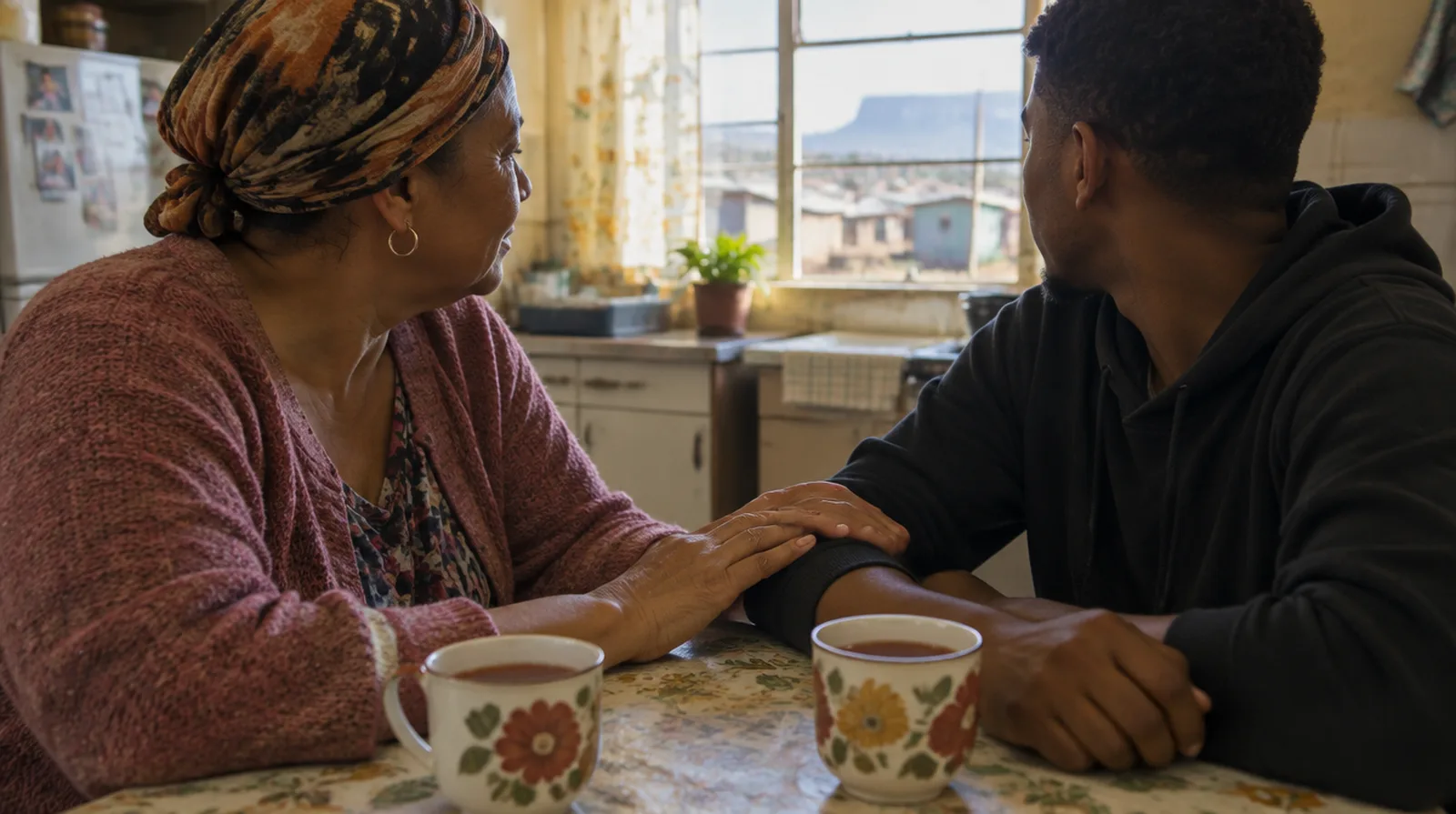
To the person reading this.
You love someone who is struggling, and you want them to get better.
Maybe you’ve watched them try before and relapse. Maybe you’ve issued ultimatums. Maybe you’ve paid for programmes that didn’t work, or spent years waiting for them to hit rock bottom so they’d finally be ready to change. Maybe you’re exhausted. Angry. Scared.
This guide is for you — wherever you are, whoever your loved one is, whatever they are struggling with. Not to convince you that addiction is easy, but to share an approach the evidence has supported for decades, and that most families have never been told about. It’s called harm reduction.
First: what hasn’t worked.
The message most of us received about addiction is simple: stop completely, or you have failed. Underneath it sits another message: if you really wanted to stop, you would. Your problem is willpower. You haven’t suffered enough yet.
For some people, that approach works — and complete abstinence is the right path for some. We fully support that goal. But around 85% of people relapse after abstinence-only treatment. Not because they didn’t try hard enough, but because the model wasn’t built for them.
What addiction actually is.
Addiction is a mental health condition — a desperate attempt to find a way to live inside yourself when living inside yourself feels unbearably uncomfortable.
People use substances, restrict food, gamble or turn to other addictive behaviours because, at some point, it worked. It numbed the pain. It silenced the anxiety. It made life liveable.
We don’t shame people for a return of depression or anxiety. But when someone in addiction has a recurrence of symptoms, we call it failure. In 2024, NIDA-supported research across 13 randomised clinical trials confirmed that reducing use — even without full abstinence — is a clinically meaningful outcome.
So what is harm reduction?
A globally recognised, evidence-based approach practised by governments, hospitals and counselling services since the 1980s, and endorsed by the WHO, UNAIDS and UNODC.
“Any positive change is progress.”
Harm reduction does not say “use as much as you want”. It says: wherever you are right now, we can reduce the harm, build the support, and create the conditions where real change becomes possible. It works for people pursuing abstinence, for people who aren’t ready, and at every stage in between.
It works alongside everything.
- 12-Step programmes — AA, NA, Al-Anon. Many of our clients attend both.
- Faith-based recovery — Christian, Muslim, Jewish, Buddhist and all traditions.
- Medical & psychiatric treatment — alongside GPs, psychiatrists, medication and detox programmes.
- Residential rehabilitation — before, as aftercare, or as an alternative where residential care isn’t accessible.
- SMART Recovery, Refuge Recovery and other secular programmes.
- Employee Assistance Programmes — within corporate wellness structures.
There is no right way to recover. There is only their way.
With alcohol
Alcohol is the most widely used addictive substance in the world, and one of the most misunderstood because it is socially normal. Harm reduction looks like gradual reduction, identifying triggers (anxiety, loneliness, stress, unprocessed trauma), setting meaningful personal goals, and working towards abstinence at a sustainable pace.
Important: stopping suddenly after heavy, long-term drinking can cause seizures and can be fatal. Withdrawal from heavy drinking should be medically supervised.
With substances
Cannabis: reducing frequency and understanding what the use is masking — anxiety, insomnia, social avoidance. Stimulants: reducing use without requiring full abstinence leads to significant health improvements. Opioids: national harm reduction programmes in Portugal and Switzerland have dramatically cut deaths, infections and crime. Prescription medication: medically informed tapering, while addressing the anxiety or pain that drove the use.
If your loved one attends AA, goes to church, takes medication or is in any other programme, our counselling runs alongside all of it — and we coordinate with any professional involved.
With eating disorders
Eating disorders have the highest mortality rate of any mental health condition. Demanding full recovery as the only valid goal has stopped many people from seeking help at all. Progress can look like purging less often, eating something small instead of nothing, reducing compulsive exercise, or no longer fearing one food.
We approach eating disorders the way we approach every form of addiction: without judgement, without ultimatum, and with the understanding that the behaviour is always a response to something deeper.
Other addictive behaviours
Every addictive behaviour serves a function. Harm reduction asks: what is this doing for you — and how can we meet that need with less harm?
Gambling
Setting loss limits, removing credit access, noticing the emotional state that comes first, building substitute activities.
Sex & pornography
Addressing underlying loneliness, shame or relational trauma, and working towards boundaries the person defines.
Shopping & spending
Identifying emotional triggers, building financial boundaries, and addressing the self-worth concerns underneath.
Work addiction
Introducing meaningful boundaries and building a life outside performance and productivity.
Technology & social media
Reducing screen time gradually, understanding what the scrolling numbs, and building real-world connection.
Codependency
Learning to tolerate discomfort without rescuing or controlling, and building a self that exists outside the relationship.
“Isn’t this just enabling them?”
Enabling means removing consequences so the addiction continues without friction — covering debts, calling in sick for them, hiding the problem. Harm reduction is the opposite: active professional support that engages with the problem, builds accountability and creates the conditions for change. People in harm reduction programmes use less, not more — and are more likely to enter further treatment and to survive long enough to recover.
“They need to just stop.”
If stopping were simple, they would have stopped. That they haven’t is not evidence of too little motivation or too little love for you. It means something underneath — pain, trauma, anxiety — hasn’t yet been addressed. Harm reduction asks why it started, and builds the conditions that make a different life possible.
“What if they relapse?”
Then we continue. A relapse is a recurrence of symptoms — just like a return of depression. We don’t discharge people for a bad week. A relapse is information: what happened, what triggered it, what needs to change.
And you?
You are carrying this too. Our counsellors work with partners and family members in their own right — and our addiction programme includes a weekly flexible session that you can join.
The evidence
| Finding | Source | Year |
|---|---|---|
| 80% reduction in drug-related deaths | Portugal national harm reduction programme · EMCDDA | 2024 |
| 82% fewer new heroin users; 98% fall in drug-related theft | Switzerland heroin-assisted treatment · SFOPH | 2023 |
| Zero on-site overdose deaths across 3.6M+ visits | Insite supervised consumption site, Vancouver · The Lancet | 2023 |
| Reducing use without abstinence is a clinically valid outcome | NIDA-supported analysis of 13 randomised trials · Addiction journal | 2024 |
| Harm reduction lowers overdose deaths and infections, and improves treatment engagement | Agency for Healthcare Research & Quality (US) | 2024 |
| Harm reduction in eating disorders is ethically sound and patient-endorsed | Journal of Eating Disorders · Birch et al. | 2024 |
| 85% relapse rate for abstinence-only treatment | National Institute on Drug Abuse | 2024 |
| 48.5 million people with substance use disorder | SAMHSA National Survey on Drug Use & Health | 2024 |
What actually creates recovery.
The people who recover are not the ones who were issued the most ultimatums, or shamed most effectively, or who hit bottom in exactly the right way. They are the ones who found someone who kept showing up for them — who didn’t define them by their worst moments.
Harm reduction is how you become that person for them. Even if you can’t do it alone.
Your truth deserves to be heard.
Choose a counsellor who speaks your language and understands your world. Sessions are online, private and booked in minutes.